Financial data warehouse, 350 percent
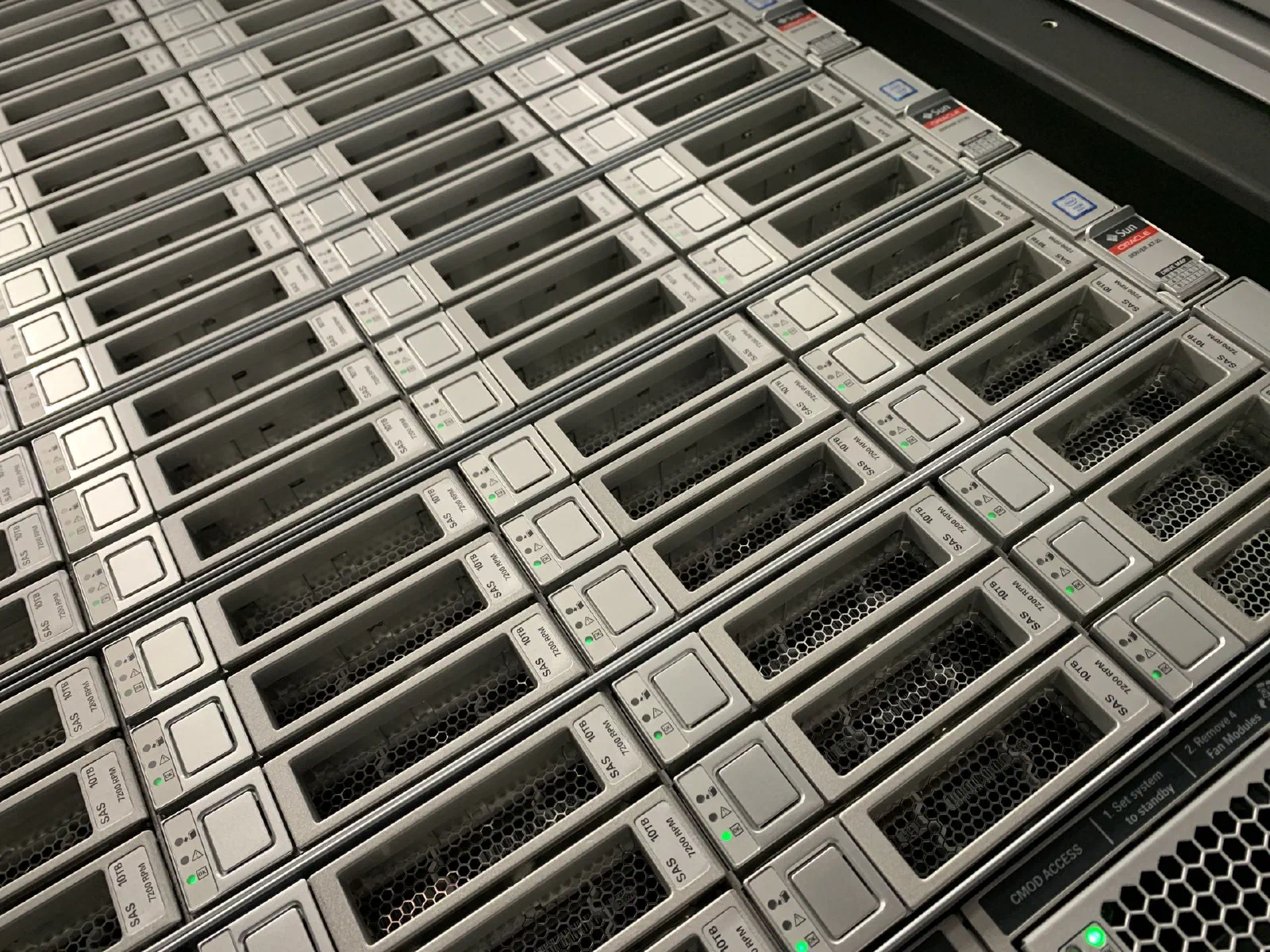
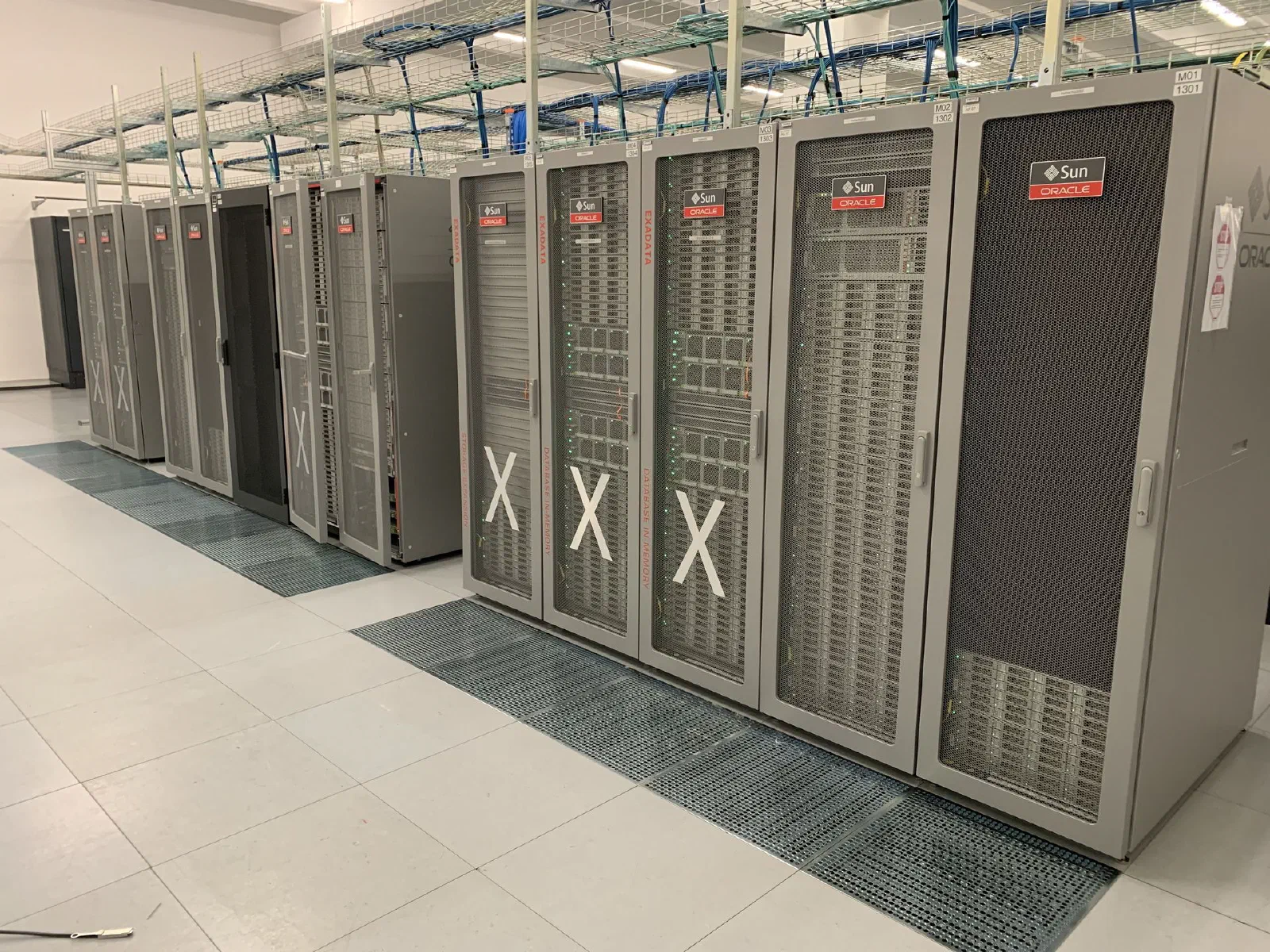
A business-critical financial data warehouse at an international bank. We reworked both hardware and software architecture: NVMe over Fabrics to kill the access latency, InfiniBand as the interconnect between servers and storage. The performance figures went up 350 percent — visible in processing, visible in the reports that decisions rest on.
The installation was sized for four years, then a refresh. Ten years later it still runs almost unchanged. The refresh never happened. That is where a tailored suit saves money.
Data warehouse migration at a telco
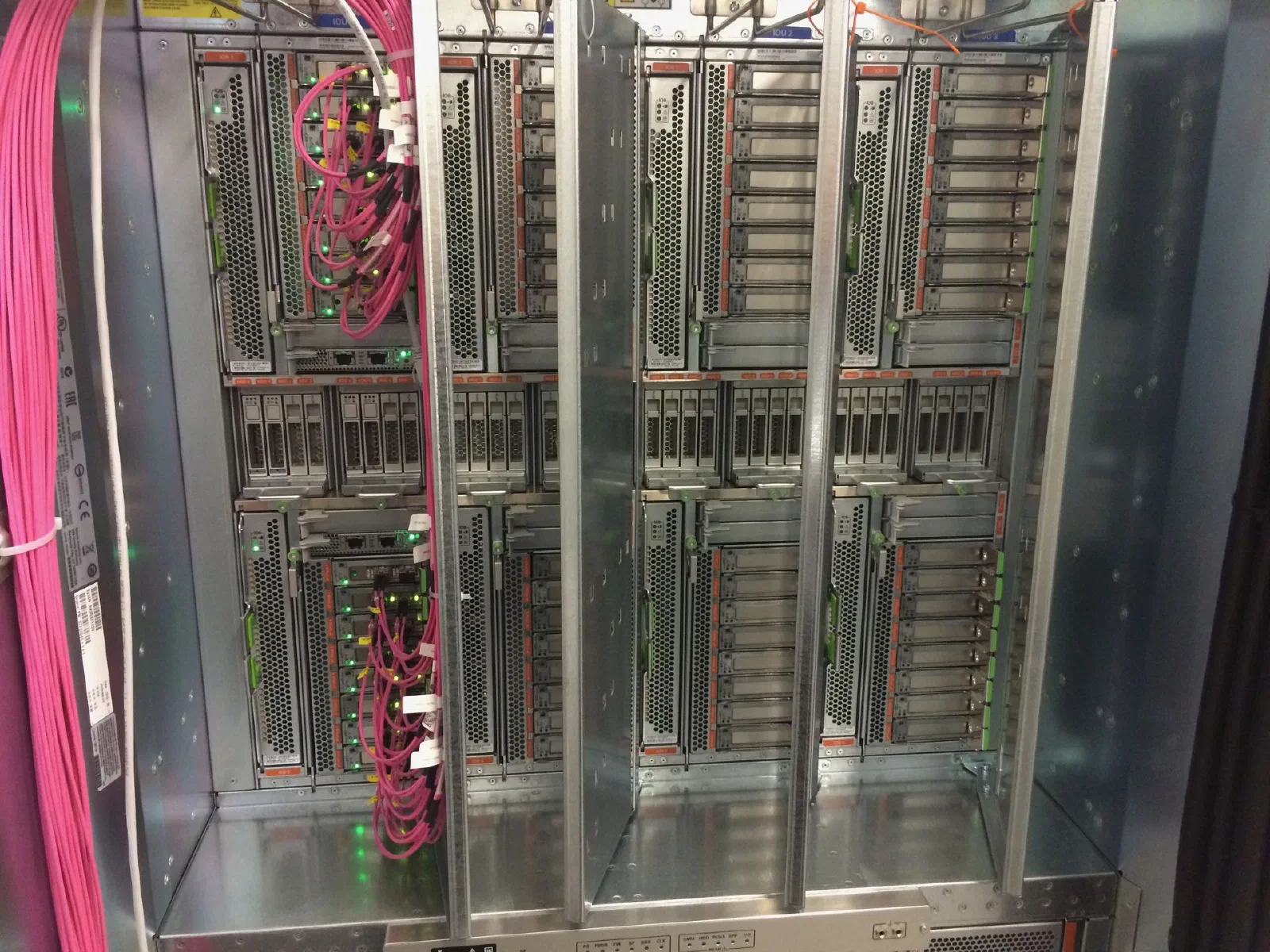
The largest data warehouse of a leading telecommunications provider. Source: SunFire 25K. Target: Sun Enterprise M6 with a Hitachi Data Systems storage platform, Oracle databases on top.
The build: 32 Fibre Channel paths in multipath groups, the Oracle Grid distributed cleanly across them so every path carries — not one active and thirty-one on standby. Hardware domains above that for staging.
This installation holds the customer data. Every store that signs or renews a contract touches it. Every call center.
The customer's other service providers did not want to go along with much of it — because it is not standard. It was built anyway. In the end the migration was done in a fraction of the window planned for it.
From Control-M to Airflow
Analysis, design and full documentation for migrating tangled IT workflows off several schedulers — Control-M among them — onto Apache Airflow. International finance sector.
The effort is not in rewriting the jobs. It is in the detail of the job chains: fan-outs, self-triggering chains, loops, conditions, different entry points into the same chain. Miss those and you migrate a scheduler that runs cleanly in normal operation and stops dead at the first exception.
Plus purpose-built programs and tools that took the risk out of the transition and sped it up. What remained was a toolchain with documentation the customer used to migrate the rest on their own. Without us.